■問題PDF
令和7年度_学力検査問題過去問【青森】- 英語
■目次
大問1
大問2
大問3
大問4
■大問1
1-(1):放送による検査
ア 図
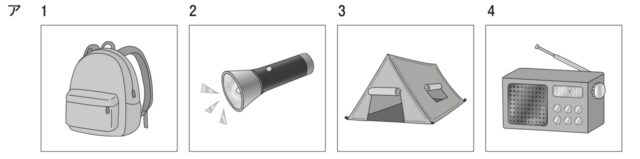
イ 1 At 7:45. 2 At 8:00. 3 At 8:15. 4 At 8:35.
ウ 1 Where is your notebook? 2 Is this notebook yours? 3 My notebook is on the table. 4 Do you know where my notebook is?
解答 : ア2 イ2 ウ4
解説 : ※放送による問題であり、内容不明のため省略。
1-(2):(2) ア 1 To practice speaking English. 2 To ask questions to Ms. Green. 3 To write an e-mail to Ms. Green. 4 To tell weekend plans to their friends.
イ 1 On Friday. 2 By Thursday. 3 This Wednesday. 4 Next Tuesday.
ウ 1 She will answer the students’ questions. 2 She will talk about weekend plans with students. 3 She will have classes in another school. 4 She will have a meeting with teachers.
解答 : ア3 イ1 ウ4
解説 : ※放送による問題であり、内容不明のため省略。
1-(3):(3) ア 1 He will go to the library. 2 He will help Kate do her homework. 3 He will study science at school. 4 He will go to the hospital.
イ 1 Last week. 2 Five times. 3 About twenty members. 4 For one month.
解答 : ア4 イ2
解説 : ※放送による問題であり、内容不明のため省略。
1-(4):⑷( )
解答 : (例)I practiced for the chorus contest with my classmates. I studied hard with my friends and we helped each other.
解説 : ※放送による問題であり、内容不明のため省略。
■大問2
2-(1)ア:2 次の英文は、中学2年生のヒカリ (Hikari)と、カナダ人留学生のキャシー (Cathy) の対話の 一部です。これを読んで、あとの (1) ~ (3) に答えなさい。
Hikari : Hi, Cathy. Do you have anything to do next Saturday?
Cathy : No, I don’t. I will be free on that day. Why?
Hikari I will go to Kaede Zoo with my cousin. ア Would (us like with you to come )?
Cathy: Yes! I want to go because I have never been to a zoo in Japan!
Hikari: I’m glad to hear that! Kaede Zoo is so popular. Especially on weekends, it is very crowded in the morning. So, why don’t we go there in the afternoon?
Cathy Sure. Why is the zoo so popular?
Hikari: イ Because (kinds it animals many has of). Also, there are some popular events every day.
Cathy: That sounds fun! What events can we enjoy?
Hikari: We can choose from four events. Look at this *pamphlet. It shows the time of each event.
【パンフレットの一部】
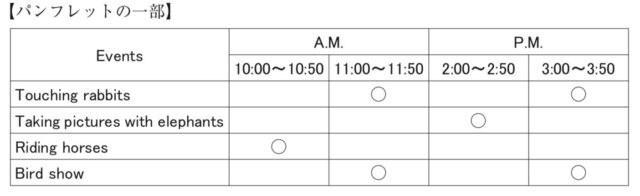
Cathy: Wow, all of these events are interesting to me.
Hikari: Which one is the most interesting to you?
Cathy: I like big animals, so I want to take pictures with elephants. I will show the pictures to my parents in Canada.
Hikari: OK, then let’s take pictures with elephants. My cousin said she wanted to see the bird show. If we get to the zoo by 2:00 p.m., we can enjoy [ ] events!
Cathy: That’s nice! By the way. Kaede Zoo is far from our town, right? How can we go there?
Hikari: ウ My father told me (us would that take to he) the zoo by car. Please finish lunch quickly and come to my house before 1:00 p.m.
Cathy: I see. Thank you so much!
(注) pamphlet パンフレット far from ~から遠い
(1) 下線部ア〜ウについて、文の意味が通るように、( )内の語をすべて用いて、正しい順序に 並べかえて書きなさい。
解答 : Would(you like to come with us)?
解説 : [本文の日訳]
ヒカリ: やあ、キャシー。来週の土曜日は何か予定がある?
キャシー: ううん、ないよ。その日は空いているよ。どうして?
ヒカリ: いとこと一緒に楓動物園に行くんだ。私たちと一緒に来ませんか?
キャシー: 行く!日本で動物園に行ったことがないから、行きたいわ!
ヒカリ: そう聞いて嬉しいよ!楓動物園はすごく人気があるんだ。特に週末は午前中がとても混むんだよ。だから、午後にそこに行くのはどうかな?
キャシー: いいね。どうしてその動物園はそんなに人気があるの?
ヒカリ: たくさんの種類の動物がいるからだよ。それと、毎日いくつか人気のイベントがあるんだ。
キャシー: それは楽しそうだね!どんなイベントがあるの?
ヒカリ: 4つのイベントから選べるよ。このパンフレットを見て。それぞれのイベントの時間が出ているよ。
キャシー: わあ、どれも私には面白そうよ。
ヒカリ: 君にとって一番面白そうなのはどれ?
キャシー: 私は大きな動物が好きだから、ゾウと写真を撮りたいわ。カナダにいる両親にその写真を見せるつもりなの。
ヒカリ: オーケー、じゃあゾウと写真を撮ろう。いとこはバードショーを見たいって言っていたんだ。もし私たちが午後2時までに動物園に着けば、2つのイベントを楽しめるね!
キャシー: それはいいね!ところで、楓動物園は私たちの町から遠いよね?どうやってそこに行こうか?
ヒカリ: 父が、車で私たちを動物園まで連れて行ってくれるって言っていたよ。お昼ご飯を早く済ませて、午後1時までに私の家に来てね。
キャシー: わかったわ。本当にありがとう!
ア「私たちと一緒に来ませんか?」と相手を誘うときの決まり文句です。
・Would you like to V? (Vしませんか?)
・come with us (私たちと一緒に来る)
2-(1)イ
解答 : Because(it has many kinds of animals).
解説 : イ「なぜなら、たくさんの種類の動物がいるからです」という意味の文です。
・主語:it (動物園)
・動詞:has (持っている)
・目的語:many kinds of animals (たくさんの種類の動物)
2-(1)ウ
解答 : My father yold me(that he would take us to)the zoo by car.
解説 : ウMy father told me (私の父は私に言いました) の後に続く間接話法の部分です。that の後に「父が私たちを連れて行ってくれるだろう」という内容が続きます。
・主語:he (彼=父)
・助動詞:would
・動詞:take
・目的語:us
・場所:to the zoo
2-(2):(2) [ ]に入る最も適切な語を、次の1~4の中から一つ選び、その番号を書きなさい。
1 another 2 all 3 any 4 both
解答 : 4
解説 : ヒカリは、「もし午後2時までに動物園に着けば」(If we get to the zoo by 2:00 p.m.)、この2つのイベント (ゾウの写真撮影とバードショー) の両方に参加できると述べています。
したがって、「ゾウと写真を撮る」と「バードショー」の2つのイベントを指すため、「両方」を意味する both が最も適切です。
1 another (もう一つの) → 2つ以上のうちの「もう一つ」を指すため不適切。
2 all (すべて) → イベントは4種類あるため、「すべて」は不適切。
3 any (いずれか、どれでも) → 2つの特定のイベントを指すため不適切。
4 both (両方) → 2つのイベントを指すため、適切。
2-(3)1:(3) 次の文章は、ヒカリと出かけた次の日に、キャシーがカナダにいる母親に送ったメールの内容の 一部です。下線部1、2をそれぞれ一つの英文で書きなさい。
Yesterday, I went to Kaede Zoo with my friend and her cousin. 1 その動物園は3年前に 建てられました。It was new, and we had a good time there. I have sent you some pictures with this message. In the pictures, we are smiling next to an elephant! 2 赤い帽子をかぶっている 女の子は、私の友達です。Her name is Hikari. She is always nice to me.
解答 : (例)The zoo was built three years ago.
解説 : 1: 「建てられた」は、主語(動物園)が何かを「される」動作なので、受動態 (be動詞+過去分詞) を使います。
「3年前に」は、過去の特定の時点を示すので、過去形 (was built) を使い、three years ago を加えます。
2-(3)2
解答 : (例)The girl wearing a red hat is my friend.
解説 : 2: 「赤い帽子をかぶっている女の子」が主語です。これは、The girlを「かぶっている」という現在進行中の動作で修飾する形にします。
この場合、the girl の直後に現在分詞 (wearing) を使って形容詞句のように修飾します。
■大問3
3-(1)A:3 次の英文は、高校1年生のタクマ (Takuma) と留学生のジャック (Jack)の対話の一部です。 これを読んで、あとの (1) (2) に答えなさい。
Takuma:Hi,Jack.What did you do during summer vacation?
Jack: I went to Kyoto with my family. We visited some famous temples. They were old, but very beautiful. Someday I want to travel there again.
Takuma:Wow! You had a nice vacation.
Jack : How was your summer vacation?
Takuma: It was good. [ A ]
Jack : What was it?
Takuma:It was running. My father likes running and always says he is *refreshed after running. When I had nothing to do, I tried running with my father and felt very good. Now I enjoy it every day.
Jack: Every day? I’m surprised to hear that!
Takuma:It is not so hard to run every day. I usually run in Midori Park. It is a large park near my house, and it has a lot of trees. I really like running there.
Jack : That sounds great. I want to start to *exercise, too.
Takuma: How about running? It’s easy to start and you don’t need to buy anything.
Jack:That’s good. But I’m worried. [ B ]
Takuma:Oh, you don’t have to! When I started running. I could run for only five minutes. But I felt better.
Jack:Really? I thought I needed to run more. I will try running for a short time at first.
Takuma:I’m sure that you can enjoy running! You may think that you want to run for a long time if you keep running.
Jack:I hope so. [ C ]
Takuma:Of course! I am very glad. How about running in the morning on Saturday?
Jack:OK. What time is good for you?
Takuma: I usually start to run at nine on weekends. So, let’s meet at Midori Park then.
Jack:I see. I’m looking forward to running with you.
(注) refreshed 気分がすっきりした exercise 運動する worried 心配して
(1) 二人の対話が成立するように、[ A] ~[C] に入る最も適切なものを。 次の1~7の中からそれぞれ一つ選び、その番号を書きなさい。
1 Did you have time to run with me?
2 I looked for a place for running.
3 How about starting new sports this weekend?
4 I started a new thing and enjoyed it.
5 Can I run with you this weekend?
6 I gave a special thing to my father.
7 I don’t think I can run for a long time.
解答 : 4
解説 : [本文の日訳]
タクマ: やあ、ジャック。夏休み中は何をしていたの?
ジャック: 家族と京都に行ったんだ。有名な寺をいくつか訪ねたよ。古かったけど、とても美しかった。いつかまた旅行したいな。
タクマ: わあ!素敵な休暇だったんだね。
ジャック: タクマの夏休みはどうだった?
タクマ: 良かったよ。新しいことを始めて、それを楽しんだよ。
ジャック: それは何だったの?
タクマ: 走ることだよ。父が走るのが好きで、いつも走った後気分がすっきりするって言ってるんだ。何もすることがないときに、父と一緒に走ってみたら、すごく気持ちよかった。今は毎日楽しんでいるよ。
ジャック: 毎日?それを聞いて驚いたよ!
タクマ: 毎日走るのはそんなに大変じゃないよ。僕は普段、緑(Midori)公園で走っているんだ。僕の家の近くにある大きな公園で、木がたくさんあるんだ。そこで走るのが本当に好きなんだ。
ジャック: それはいいね。僕も運動を始めたいな。
タクマ: 走るのはどう?始めるのは簡単だし、何も買う必要がないよ。
ジャック: それはいいね。でも、一つ心配なことがあるんだ。長い時間走れるとは思えないんだ。
タクマ: ああ、そんな心配はいらないよ!僕が走り始めたときも、たった5分しか走れなかったんだ。でも気分は良くなったよ。
ジャック: 本当?もっと長く走らなきゃいけないと思っていたよ。最初は短い時間だけ走ってみるよ。
タクマ: きっと走るのが楽しくなるよ!走り続ければ、もっと長い時間走りたいと思うようになるかもしれないよ。
ジャック: そうだといいな。今週末、一緒に走ってもいい?
タクマ: もちろん!とても嬉しいよ。土曜日の朝に走るのはどうかな?
ジャック: わかった。何時が都合がいい?
タクマ: 週末はいつも9時に走り始めるんだ。だから、その時間に緑公園で会おう。
ジャック: わかった。一緒に走るのを楽しみにしているよ。
[選択肢の日訳]
1:Did you have time to run with me?(私と一緒に走る時間はありましたか?)
2:I looked for a place for running.(私は走るための場所を探しました。)
3:How about starting new sports this weekend?(今週末に新しいスポーツを始めるのはどうですか?)
4:I started a new thing and enjoyed it.(私は新しいことを始めて、それを楽しんでいました。)
5:Can I run with you this weekend?(今週末、あなたと一緒に走ってもいいですか?)
6:I gave a special thing to my father.(私は父に特別なものをあげました。)
7:I don’t think I can run for a long time.(私は長い時間走れるとは思えません。)
A:直後にジャックが「それは何?」と尋ね、タクマが「走ることだよ」と答えています。新しいことを始めたという話題の提供として最も適切です。
3-(1)B
解答 : 7
解説 : B:直後にタクマが「心配しなくていいよ!僕は最初は5分しか走れなかった」と答えて、ジャックの不安を解消しています。ジャックの「心配」(worried) の内容としてこれが最も適切です。
3-(1)C
解答 : 5
解説 : C:直後にタクマが「もちろん!とても嬉しいよ。土曜日の朝に走るのはどうかな?」と誘いに応じ、具体的な日時を提案しています。走ることを決めた後の、誘いの言葉として最も適切です。
3-(2):(2) 二人の対話の内容と合うものを、次の1~6の中から二つ選び、その番号を書きなさい。
1 Jack heard Takuma’s traveling experience about his summer vacation.
2 Takuma didn’t feel good when he tried running with his father.
3 Jack said that he wanted to exercise, so Takuma recommended running.
4 Takuma thinks it is hard to run in Midori Park every day.
5 Jack will start running, so he has to buy things for it.
6 Takuma and Jack will meet at Midori Park at nine on Saturday.
解答 : 3,6
解説 : [選択肢の日訳]
1:Jack heard Takuma’s traveling experience about his summer vacation.(ジャックはタクマの夏休みの旅行の経験を聞いた。)
2:Takuma didn’t feel good when he tried running with his father.(タクマは父親と一緒に走ってみたとき、気分が良くなかった。)
3:Jack said that he wanted to exercise, so Takuma recommended running.(ジャックが運動したいと言ったので、タクマはランニングを勧めた。)
4:Takuma thinks it is hard to run in Midori Park every day.(タクマは毎日緑公園で走るのは大変だと考えている。)
5:Jack will start running, so he has to buy things for it.(ジャックはランニングを始めるので、そのために物を買わなければならない。)
6:Takuma and Jack will meet at Midori Park at nine on Saturday.(タクマとジャックは土曜日の9時に緑公園で会うだろう。)
1:誤り。タクマが聞いたのはジャックの京都旅行の経験です。ジャックはタクマの新しい活動について聞きました。
2:誤り。タクマは「I tried running with my father and felt very good.」と言っており、気分が良かったと述べています。
3:適切。「That sounds great. I want to start to exercise, too.」というジャックの言葉に対し、タクマは「How about running?」と勧めています。
4:誤り。タクマは「It is not so hard to run every day.」と言っており、毎日走るのはそれほど大変ではないと考えています。
5:誤り。タクマは「you don’t need to buy anything」と説明しており、何かを買う必要はないと述べています。
6:適切。ジャックの誘い([C])に対し、タクマは「How about running in the morning on Saturday? I usually start to run at nine on weekends. So, let’s meet at Midori Park then.」と答えています。
■大問4
4-(1): 次の英文は、中学3年生のサキ (Saki)が、津軽三味線(Tsugaru-jamisen) について英語の 「授業で発表した内容の一部です。これを読んで、あとの (1) ~ (3) に答えなさい。
Last week, a musician came to our school and we saw a Tsugaru-jamisen performance. I was surprised to hear its very beautiful and powerful sound. I told this experience to my grandmother because she loved the Tsugaru-jamisen. She said, “When I saw one musician’s performance for the first time, I felt that his music was wonderful. His name is *Takahashi Chikuzan. He has been my favorite.” After talking with my grandmother. I became interested in him. I’ll tell you the story about his life that I heard from her. Chikuzan was born in Aomori *Prefecture in 1910. When he was little, he lost almost all of his *sight. After that, there were many hard things in his life. But he learned how to play the Tsugaru-jamisen and listened to many players’ sounds again and again. He practiced a lot to play the Tsugaru-jamisen better. By doing so, he developed his original way of playing it. Later, he started to play with a famous singer in many places in Japan. He also visited some other countries and showed his performance. People felt that it was very exciting. He died in 1998, but his music was given to the next generation. I watched Chikuzan’s videos on the Internet after hearing about him. His *soulful music moved my heart. I felt his life and strong spirit. I thought that the Tsugaru-jamisen became famous because his music was loved by many people. Takahashi Chikuzan became one of the people I respect.
(注) powerful 力強い, Takahashi Chikuzan 高橋竹山(人名), prefecture 県, sight 視力, soulful 感情のこもった, spirit 精神
(1) 次の文章は、サキの発表の内容を、同級生がまとめたものの一部です。発表の内容と 合うように、(ア)~(ウ)に入る最も適切な英語1語を、本文中の単語を用いて、 それぞれ書きなさい。
Saki heard the (ア) about Chikuzan’s life from her grandmother.
Chikuzan (イ) people his performance in other countries.
Chikuzan’s music (ウ) Saki’s heart when she watched his videos.
解答 : ア story イ showed ウ moved
解説 : [本文の日訳]
先週、一人の演奏家が私たちの学校に来て、私たちは津軽三味線の演奏を見ました。そのとても美しく、力強い音色を聞いて、私は驚きました。
津軽三味線が大好きだった祖母に、この体験を話しました。祖母は言いました。「初めて一人の演奏家の演奏を見たとき、その人の音楽は素晴らしいと感じたわ。その人の名前は高橋竹山よ。ずっと私のお気に入りなの」祖母と話した後、私は彼に興味を持ちました。これから、私が祖母から聞いた彼の人生についての話をします。
竹山は1910年に青森県で生まれました。彼が幼い頃、ほとんど視力を失いました。その後、彼の人生には多くの困難がありました。しかし、彼は津軽三味線の弾き方を学び、多くの演奏家の音色を何度も聞きました。彼は津軽三味線をより上手に演奏するためにたくさん練習しました。そうすることによって、彼は独自の演奏方法を築き上げました。後に、彼は日本国内の多くの場所で有名な歌手と一緒に演奏を始めました。彼はまた、いくつかの外国を訪れ、彼の演奏を披露しました。人々はその演奏がとてもエキサイティングだと感じました。彼は1998年に亡くなりましたが、彼の音楽は次の世代に受け継がれました。私は彼の話を聞いた後、インターネットで竹山の動画を見ました。彼の感情のこもった音楽は私の心を動かしました。私は彼の人生と強い精神を感じました。私は、彼の音楽が多くの人々に愛されたからこそ、津軽三味線は有名になったのだと思いました。高橋竹山は、私が尊敬する人の一人になりました。
(ア) : Saki heard the (ア) about Chikuzan’s life from her grandmother.
(サキは祖母から竹山の人生についての(ア)を聞きました。)
本文で、「 I’ll tell you the story about his life that I heard from her.」とあります。
ここから、サキが祖母から聞いたのは竹山の「人生の話」だとわかります。。本文中で、サキが「彼の人生についての話」をこれから発表すると述べています。
(イ) : Chikuzan (イ) people his performance in other countries.
(竹山は外国で人々に彼の演奏を(イ)しました。)
本文で、「He also visited some other countries and showed his performance.」とあります。
ここから、竹山が外国を訪れた目的は、彼の演奏を人々に「見せる」または「披露する」ことだと分かります。本文では showedが使われています。
(ウ) : Chikuzan’s music (ウ) Saki’s heart when she watched his videos.
(竹山の音楽は、彼女が動画を見たとき、サキの心を(ウ)しました。)
本文で「His soulful music moved my heart.」とあります。
ここから、竹山の音楽がサキの心に与えた影響は、「心を動かした」ことだとわかります。本文では moved が使われています。
4-(2):(2) サキの発表の内容と合うように、次の1~3の質問に対する答えをそれぞれ一つの英文で 書きなさい。
1 How did Saki’s grandmother feel to see Chikuzan’s performance for the first time?
2 What did Chikuzan develop by practicing the Tsugaru-jamisen a lot?
3 Did Saki think that Chikuzan’s music made the Tsugaru-jamisen famous?
解答 : (例)1 She felt that his music was wonderful.
2 He developed his original way of playing it.
3 Yes,she did.
解説 : 1. 本文で祖母は「When I saw one musician’s performance for the first time, I felt that his music was wonderful.」と述べています。したがって、彼女は彼の音楽が素晴らしいと感じたことがわかります。
2. 竹山が練習を重ねた結果について、本文は「He practiced a lot… By doing so, he developed his original way of playing it.」と説明しています。つまり、彼は独自の演奏方法を編み出しました。
3. サキは発表の結びで、「I thought that the Tsugaru-jamisen became famous because his music was loved by many people.」と述べています。これは、竹山の音楽が津軽三味線を有名にしたという考えに同意していることを意味するため、質問に対する答えは Yes, she did. となります。
4-(3):(3) 下線部に関して、「あなたが尊敬する人」一人について、その理由を含めて英語 20語以上で 書きなさい。文の数はいくつでもかまいません。また、人名を用いる場合は、ローマ字で 書いてもかまいません。
解答 : (例)I respect my mother so much because she always works hard. She is also very kind and thinks about our family.
I think Muyazaki Hayao is great because he made wonderful movies that Ilike. They are very popukar among children, adults, and even foreign people.
解説 : 解答のポイント
以下の3つの要素を含めると書きやすいです。
1.誰か: The person I respect is [人名]…
2.その人の功績や特徴: She/He was a great [職業]…
3.尊敬する理由: I respect her/him because… または I respect her/his [性格/行動]…
■大問5
5-(1)ア:5 次の英文は、中学2年生のミカ (Mika)が、英語の授業で発表した内容です。これを読んで、 あとの(1)~(3)に答えなさい。(25点)
“Mika, how about joining the next *election to be the *president of the student council? You can communicate well with our classmates, and you always take care of your friends. I think you will be a good leader.” When my classmate Junko told this to me. I felt happy because I liked doing things for other students. But I was not good at talking in front of many people. I had no *confidence because I was only a leader in a small group. So, I couldn’t decide to join the election then. One day. I watched the news about a *project on TV. It said, “There are many buildings which are not used in Japan now. A company started to use one of them as a hotel. The rooms of the hotel were designed by four students who went to a *technical school. One of them became the leader of the project.” I got interested in the news because it let me know how the students worked and how the leader felt in the project. The students had many ideas for designing rooms, but they found some problems. They needed to think about what they could do or couldn’t do with the money for the project, and they sometimes had to make some decorations by themselves. But they talked a lot to find the best way. They always helped each other and worked together. It took a long time to finish designing the rooms. I thought the rooms were unique and nice. At the end of the news, the leader of the project talked about what he felt. “At first, I couldn’t imagine that I could do well because I had no experience as a leader in a big project like this. Also, I got nervous easily and was not very good at communicating. But I wanted to make good rooms with the other members in the project, so I tried to change myself and communicated a lot with them. Working as a leader was not easy for me, but I could learn a lot through this experience.” I felt that the leader’s words were saying to me, “You should go forward even if you have something that you are not good at. You can change yourself and that will make you proud.” I stopped trying new things when I felt that something was difficult. When I realized this. I thought that I needed to improve myself. The leader’s words gave me power to go forward. So, I’ve decided to join the election. I know that some difficult things are waiting for me, but I will do my best for the students in this school.
(注) election 選挙 leader リーダー technical school 専門学校 president of the student council 生徒会長 confidence 自信 装飾 project プロジェクト
(1) 本文の内容と合うように英文を完成させるとき、次のア〜エに続く最も適切なものを、1~4の 中からそれぞれ一つ選び、その番号を書きなさい。
ア When Junko told Mika to join the election, Mika
1 decided to become a leader for her classmates.
2 felt glad because she liked doing things for other students.
3 thought that she was good at talking in front of many people.
4 had confidence because she was a small group leader.
解答 : ア 2
解説 : [本文の日訳]
「ミカ、次の生徒会長の選挙に出てみたらどう?あなたはクラスメイトと上手にコミュニケーションが取れるし、いつも友達の面倒を見ているわ。あなたは良いリーダーになれると思うわ。」
クラスメイトのジュンコが私にこう言ってくれたとき、私は他の生徒のために何かをするのが好きだったので、嬉しく感じました。
でも、私は大勢の人の前で話すのが得意ではありませんでした。小さなグループのリーダーにしかなったことがなかったので、自信がありませんでした。だから、その時は選挙に参加することを決めることができませんでした。
ある日、私はテレビでプロジェクトに関するニュースを見ました。そのニュースは言いました。「今、日本には使われていない建物がたくさんあります。ある会社がそのうちの一つをホテルとして使い始めました。そのホテルの部屋は、専門学校に通う4人の生徒によってデザインされました。そのうちの一人がプロジェクトのリーダーになりました。」
私はそのニュースに興味を持ちました。なぜなら、生徒たちがどのように働き、リーダーがプロジェクトでどう感じたかを知ることができたからです。生徒たちは部屋のデザインについてたくさんのアイデアを持っていましたが、いくつかの問題に直面しました。彼らは、プロジェクトの資金で何ができるか、何ができないかを考えなければならず、時にはいくつかの装飾を自分たちで作らなければなりませんでした。
しかし、彼らは最善の方法を見つけるためにたくさん話し合いました。彼らはいつもお互いを助け合い、協力しました。部屋のデザインを終えるには長い時間がかかりました。私はその部屋がユニークで素敵だと思いました。
ニュースの最後に、プロジェクトのリーダーが彼が感じたことについて話しました。「最初、私はこのような大きなプロジェクトでリーダーの経験がなかったので、うまくやれるとは想像できませんでした。また、私は緊張しやすく、コミュニケーションもあまり得意ではありませんでした。しかし、プロジェクトの他のメンバーと良い部屋を作りたかったので、自分を変えようと努力し、彼らとたくさんコミュニケーションを取りました。リーダーとして働くことは私にとって簡単ではありませんでしたが、この経験を通してたくさんのことを学ぶことができました。」
私は、そのリーダーの言葉が私に語りかけているように感じました。「苦手なことがあっても前に進むべきだ。自分自身を変えることができるし、それはあなたに誇りをもたらすだろう。」
私は、何かを難しいと感じると、新しいことに挑戦するのをやめてしまっていました。このことに気づいたとき、自分を改善する必要があると思いました。リーダーの言葉は、前に進む力を私に与えてくれました。
だから、私は選挙に参加することを決意しました。困難なことが待っていることは知っていますが、この学校の生徒たちのために最善を尽くします。
ア. When Junko told Mika to join the election, Mika(ジュンコがミカに選挙に参加するように言ったとき、ミカは…)
1:生徒たちのためのリーダーになることを決めた。→この時点では決めていません。
2:他の生徒のために何かをすることが好きだったので、嬉しく感じた。→「I felt happy because I liked doing things for other students.」とあるため、一致します。
3:大勢の人の前で話すのが得意だと思った。 →「I was not good at talking in front of many people.」とあり、逆です。
4:小さなグループのリーダーだったので、自信があった。→「I had no confidence because I was only a leader in a small group.」とあり、逆です。
5-(1)イ:イ In the project, the four students
1 started to use one of the buildings as a hotel.
2 didn’t need to think about the money for the project.
3 had to make all decorations of the rooms by themselves.
4 needed a long time to finish designing the rooms.
解答 : 4
解説 : イ.In the project, the four students…(そのプロジェクトで、4人の生徒たちは…)
1.建物の1つをホテルとして使い始めた。→ホテルとして使い始めたのはある会社であり、生徒たちではありません。
2.プロジェクトの資金について考える必要はなかった。→「They needed to think about what they could do or couldn’t do with the money for the project」(彼らは、プロジェクトの資金で何ができるか、何ができないかを考える必要があった)とあり、逆です。
3.部屋の装飾をすべて自分たちで作らなければならなかった。→「they sometimes had to make some decorations by themselves」(彼らは時々いくつかの装飾を自分たちで作らなければならなかった)とあり、すべてではありません。
4.部屋のデザインを終えるのに長い時間が必要だった。→「It took a long time to finish designing the rooms.」(部屋のデザインを終えるのに長い時間がかかった。)とあり、一致します。
5-(1)ウ:ウ The leader of the project
1 imagined he could do well when the project started.
2 worked as a leader in a big project before.
3 got nervous and couldn’t communicate with the other members.
4 learned many things through working as a leader.
解答 : 4
解説 : ウ.The leader of the project…(そのプロジェクトのリーダーは..)
1.プロジェクトが始まったとき、うまくやれると想像した。→「At first, I couldn’t imagine that I could do well…」(最初、私はうまくやれるとは想像できませんでした)とあり、逆です。
2. 以前に大きなプロジェクトでリーダーとして働いたことがあった。→「…because I had no experience as a leader in a big project like this.」(…なぜなら、このような大きなプロジェクトでリーダーとしての経験がなかったからです。)とあり、逆です。
3.緊張して、他のメンバーとコミュニケーションが取れなかった。→緊張しやすかったですが、その後「I tried to change myself and communicated a lot with them」とあり、たくさんコミュニケーションを取ったため、不一致です。
4.リーダーとして働くことを通して、多くのことを学んだ。→「…but I could learn a lot through this experience」(…しかし、私はこの経験を通してたくさんのことを学ぶことができました)とあり、一致します。
5-(1)エ:エ.Mika has decided to join the election because
1 she was told that she needed to communicate with her classmates.
2 the leader of the project said that she could become a leader.
3 she received power from the leader’s words.
4 the leader of the project made unique and nice rooms.
解答 : 3
解説 : エ.Mika has decided to join the election because…(ミカが選挙に参加することを決めたのは…)
1.クラスメイトとコミュニケーションを取る必要があると言われたから。→これは友人ジュンコやプロジェクトのリーダーから学んだ課題ですが、選挙に出る直接的な理由ではありません。
2.プロジェクトのリーダーが、彼女がリーダーになれると言ったから。→リーダーはミカ個人に話したのではなく、自分の経験を語りました。ミカはそれを自分へのメッセージとして受け取りました。
3.リーダーの言葉から力を受け取ったから。→「The leader’s words gave me power to go forward (リーダーの言葉は、前に進む力を私に与えてくれました。) So, I’ve decided to join the election.」とあり、この言葉が決定的な動機となったことがわかります。
4.プロジェクトのリーダーがユニークで素敵な部屋を作ったから。→部屋が素敵だったのは事実ですが、それはミカが選挙に出る直接的な理由ではありません。ミカの行動を変えたのはリーダーの経験談とメッセージです。
5-(2):(2) 下線部 this が表している内容を日本語で書きなさい。
解答 : (例)何か難しいことがあると感じたときには、新しいことに挑戦するのをやめてしまっていたこと。
解説 : 直前の文
「I stopped trying new things when I felt that something was difficult. When I realized this….」(私は、何かを難しいと感じると、新しいことに挑戦するのをやめてしまっていました。)
より、下線部 this が表している内容は、ミカが何かを難しいと感じると、新しいことに挑戦するのをやめてしまっていたということです。
5-(3):(3) 本文の内容をふまえて、次の英文の(ア)~(ウ)に入る最も適切な語を、下の1~7の 中からそれぞれ一つ選び、その番号を書きなさい。
At first, Mika wasn’t sure that she could (ア) well as the president of the student council. When she watched the news about a project, she got interested in it. Students in the project tried to design with many ideas, but they (イ) some problems. So, they helped each other. From the words of the project leader, she could understand that it was (ウ) for her to improve herself. She decided to do her best.
1 necessary, 2 started, 3 work, 4 careful, 5 had, 6 wrong, 7 join
解答 : ア3 イ5 ウ1
解説 :
ア:ミカは当初、生徒会長として「うまく務められる」か不安でした。プロジェクトリーダーも最初は「I couldn’t imagine that I could do well」(うまくやれるとは想像できなかった)と言っており、ここではリーダーとしてうまく務める という文脈が適切です。
イ:プロジェクトの生徒たちは多くのアイデアを持っていたが、「they found some problems」(いくつかの問題に直面した)とあります。「問題を持っていた/抱えていた」という意味で had が最も適切です。
ウ:リーダーの言葉を聞いた後、「I thought that I needed to improve myself」(自分自身を改善する必要があると思った)とミカは述べています。自分を改善することが必要であると理解したことがわかります。