■問題PDF
令和7年度_学力検査問題過去問【福岡】- 英語
■目次
大問1
大問2
大問3
大問4
■大問1
次の1~3の各組の対話が成り立つように、 A~Dにあてはまる最も適当なものを、それぞれのア〜エから一つ選び、記号を書きなさい。
1. Lucy:Good morning, Hana. How was your weekend?
Hana:It was good! There was a birthday party at my house.
Lucy:Sounds fun. A
Hana:It was my brother’s.
ア:Whose party was it?
イ:What time was it?
ウ:Who was at the party?
エ:When was it over?
解答:ア
解説:[問題の和訳]
おはよう、ハナ。週末はどうだった?
よかったわ!家で誕生日パーティーがあったの。
楽しそうだね。誰のパーティーだったの?
弟のだったの。
この答えに対応する質問は、「誰の?」と尋ねるものでなければなりません。
ア: 誰のパーティーだったの?→ Hanaの答えと一致します。
イ: 何時だったの?→ 時間を尋ねています。
ウ: 誰がパーティーにいたの?→ 参加者を尋ねています。
エ: いつ終わったの?→ 終わった時間を尋ねています。
2. Kai: Alex, look at the statue!
Alex: Wow! I have seen it in a textbook before.
Kai: I think it’s the most famous statue in this museum.B
Alex: Well, I can’t remember that.
Kai: Actually, the statue was under the sea!
ア Can you tell me how tall it was?
イ Are you interested in the statue?
ウ Will you see it again tomorrow?
エ Do you know where it was found?
解答:エ
解説:[問題の和訳]
Kai:アレックス、あの像を見て!
Alex: わあ!教科書で見たことがあるよ。
Kai:この美術館で一番有名な像だと思う。どこで発見されたか知ってる?
Alex:うーん、それは思い出せないな。
Kai:実は、その像は海底にあったんだ!
ア: どのくらいの高さだったか教えてくれる?→ 像の大きさを尋ねています。
イ: その像に興味がある?→ 興味の有無を尋ねています。
ウ: 明日また見る?→ 明日の予定を尋ねています。
エ: どこで発見されたか知ってる?→ 像が発見された場所を尋ねています。
カイがアレックスの答え(思い出せない)を受けて、「実は、海底にあったんだ!」と補足していることから、エが最も自然な流れとなります。
3. Yuna: Mark, you write Japanese very well.
Mark: Thank you. Sometimes it’s difficult, but it’s also fun.
Yuna: C Is there a reason?
Mark: Yes. I want to write a letter in Japanese to my grandma in Australia though I haven’t tried it yet. I hope the letter can show her what I’m studying in Japan.
Yuna: Nice idea! Can she read Japanese?
Mark: Yes! She often reads Japanese books because D
Yuna: Wow! She’ll be happy to receive a letter from you.
[C]
ア I believe writing Japanese is difficult for me.
イ I know you study Japanese very hard every day.
ウ I understand why you study Japanese very hard.
エ I think you must begin to learn how to write Japanese.
[D]
ア she has been studying Japanese for more than ten years.
イ she has been in Japan since she was thirty years old.
ウ she has sent letters in English many times from Australia.
エ she has received the letter written in Japanese from me.
解答:C イ D ア
解説:[問題の和訳]
ユナ:マーク、日本語を書くのがとても上手ね。
マーク:ありがとう。時々難しいけど、楽しいよ。
ユナ:あなたが毎日とても熱心に日本語を勉強しているのは知っているわ。何か理由があるの?
マーク:うん。まだ試してないけど、オーストラリアにいるおばあちゃんに日本語で手紙を書きたいんだ。その手紙で、僕が日本で何を勉強しているか彼女に伝えられたらいいなと思って。
ユナ:いい考えね!彼女は日本語が読めるの?
マーク:うん!彼女はよく日本の本を読んでいるんだ。なぜなら、彼女は10年以上も日本語を勉強しているからです。
ユナ:すごい!彼女はあなたからの手紙を受け取ったら喜ぶわね。
[C] 後文の「何か理由があるの?」という質問は、マークが日本語を熱心に勉強していることに対するものなので、イ「あなたが毎日とても熱心に日本語を勉強しているのは知っているわ」が最も相応しいです。
[D] マークのおばあちゃんが日本語の本を読める理由を説明しています。ア「彼女は10年以上も日本語を勉強しているからです」は、読解力があることの説得力のある理由になります。
■大問2
次の英文は、放課後の英語クラブで、悠太 (Yuta) と伊藤先生(Ms. Ito)がマレーシア (Malaysia) に住んでいるジン (Jin) と、オンラインを活用して会話をしている場面である。これを読んで、後の各問に答えなさい。
Ms. Ito: Today, we are going to talk about festivals. Can you start, Yuta?
Yuta: Yes. In Japan, we have the Tanabata Festival. We make wishes during the festival. 「」
Jin: Yes. We make wishes in our festival in Malaysia, too. I haven’t traveled to Japan, so I want to know more about the Tanabata Festival.
Yuta: OK. I will tell you how we make wishes in the festival. We write wishes on tanzaku and hang the tanzaku on bamboo.
Jin: Yuta, what is tanzaku?
Yuta: I can show you a photo I took last year.
Jin: It’s amazing! ①The photo helps (it / understand/me/can/what) is.
Yuta: I’m glad. Now, can you talk about the festival in Malaysia?
Jin: Sure. We have the Sky Lantern Festival. We write wishes on lanterns. I’ve been to the festival several times. Please watch the video I took then.
Yuta: Wow! The lanterns are flying! They are beautiful, but I’m sure that it’s better to see them in the festival. ②I wish I (had/it/like/join/ could) you.
Jin: Yuta, I have a question about the Tanabata Festival. Why do you use tanzaku of different colors?
Yuta: Oh, I haven’t thought about it. How about the lanterns in Malaysia?
Jin: We use only white lanterns in our town. However, other colors are used in other countries.
Yuta: Do you think there are any special meanings in colors? Why don’t we look for more information about the colors in the festivals?
Ms. Ito: Great. Both of you are sharing very interesting points.
(注) Tanabata:七夕 make wishes:願い事をする tanzaku:たんざく hang:~をつるす bamboo:竹 Lantern (s):ランタン、ちょうちん video:動画 meanings:意味
問1 英文中の「」には、次のア〜エのいずれかが入る。会話の内容から考えて、最も適当なものを、一つ選び、記号を書きなさい。
ア Can I see some festivals of Malaysia now?
イ Do you have a similar festival in Malaysia?
ウ Could you tell me why you make wishes?
エ Have you ever been to a festival in Japan?
解答:イ
解説:悠太は日本の七夕祭りについて、「願い事をすること」を説明しています。これに対し、ジンの返答は「はい。マレーシアの私たちのお祭りでも、同じように願い事をします。」です。このジンの返答は、悠太が言ったことと「似ている点」があることを示しています。したがって、悠太が尋ねた質問は、マレーシアにも似たようなお祭りがあるかを尋ねるものであったと考えられます。
イ Do you have a similar festival in Malaysia?(マレーシアにも似たようなお祭りがありますか?)→「願い事をする」という点で、七夕に似たお祭りがあるか尋ねる質問です。ジンの「Yes. We make wishes… too.」という返答と完全に一致します。
問2 英文中の下線部①、②が、会話の内容から考えて意味がとおるように、それぞれ( )内から4語を選び、それらを正しい語順に並べて書きなさい。
解答:①me understand what it ②could join it like
解説:
①「help + 人 + 動詞の原形」で「(人が)〜するのを助ける」という文型と、「what it is」で「それが何であるか」という意味の間接疑問文を組み合わせます。「The photo helps me understand what it is.」となります。
②「I wish I could…」で「〜できたらいいのに」という願望を表す仮定法の文型です。「I wish I could join it like you.」となります。
問3 次は、オンラインを活用して会話をした後に、悠太がジンに送ったメールである。下の各問に答えなさい。
Hi Jin,
I enjoyed talking with you today. After that, I found that each color means a different kind of wish in the Tanabata Festival.
For example, red means “thank you” and yellow means “friendship.” Now I understand [ ].We learned that our festivals are similar but they are different, right? Different cultures have different festivals.
I’ll try to learn more about other festivals around the world. I hope I can find something interesting. I’ll make a presentation about it next month. Please let me know the information you’ve got, too. See you!
Yuta
(1) 英文中の[ ]には、次のア〜エのいずれかが入る。会話とメールの内容から考えて、最も適当なものを、一つ選び、記号を書きなさい。
ア people around the world use tanzaku of different colors for different wishes in the festivals
イ I need to know more about Japanese festivals to share them with people around the world
ウ lanterns in the festivals in other countries are not as colorful as lanterns in your town
エ colors of tanzaku don’t have special meanings in Japan though colors of lanterns have different meanings in Malaysia
解答:イ
解説:会話の最後の部分で、悠太は自分の国の祭り(七夕)の色についても、まだ知らないことがあると気づきました。このメールでは、その後に調べた結果を報告しています。したがって、[ ]に入るのは、「自分たちの日本の祭りについても、まだ知らないことがあった」という気づきと、「もっと学ぶ必要がある」という意欲を表現する文が最も適切です。
イ「世界中の人々と共有するために、日本の祭りについてもっと知る必要がある」は、悠太が七夕の色の意味を調べた経験から得た結論や今後の課題を示しており、一連の会話とメールの流れに最も合致しています。
(2) 次の質問の答えとして、会話とメールの内容から考えて、最も適当なものを、後のア〜エから一つ選び、記号を書きなさい。
Which is the best topic for the presentation that Yuta will make next month?
ア Effective Ways to Talk with People on the Internet
イ How to Make Friends by Learning Different Cultures
ウ Making Different Wishes in the Festivals in Malaysia
エ Understanding Festivals in Different Cultures in the World
解答:エ
解説:質問の和訳は「来月、悠太が行うプレゼンテーションに最適なテーマはどれですか?」です。悠太はジンとの会話を通じて、日本の七夕祭りを掘り下げ、さらに世界中の祭りへと関心を広げています。メールでは「I’ll try to learn more about other festivals around the world.」と述べています。この一連の流れに最も適合するテーマは、エ「世界の異なる文化におけるお祭りを理解する」です。
■大問3
次の英文を読んで、後の各問に答えなさい。
Kana studies agriculture in high school. At school, students grow tomatoes.
One day, Mr. Sato, her teacher, said to the students, “You’re going to join an agriculture event.” Then, they talked about what to do for the event. They wanted to make something with their tomatoes, so Kana said, “Let’s make tomato juice,” and everyone agreed.
The next day, they made the first tomato juice, but they didn’t think that it was good. They thought they needed to grow better tomatoes for tomato juice to solve ①the problem. Mr. Sato once said they could adjust the sweetness and sourness by changing the amount of water and sunlight. Kana remembered that and said to him, “Can we grow tomatoes in several ways and check which tomatoes will be the best for tomato juice?” He said, “Sure! You have time before the event.” Then, they started to grow tomatoes in four different ways.
Tomatoes A: tomatoes grown with a lot of water and a lot of sunlight
Tomatoes B: tomatoes grown with a lot of water and a little sunlight
Tomatoes C: tomatoes grown with a little water and a lot of sunlight
Tomatoes D: tomatoes grown with a little water and a little sunlight
It took three months before they got four kinds of tomatoes. Then, they checked the sweetness and sourness with measuring devices and made tomato juice with each kind of tomato. The juice made with the sweetest tomatoes was good, but they wanted to make it more delicious by adding sourness. So, they decided to make tomato juice with the sweetest tomatoes and another kind of tomato. First, they used the sourest tomatoes. However, the juice became too sour, so they didn’t use it. Next, they used another kind of tomato that was sourer than the sweetest tomatoes. They were glad because the juice made with ②these two kinds of tomatoes had a great balance of sweetness and sourness. Finally, they made delicious tomato juice.
On the day of the event, many people said the tomato juice was delicious. Kana said to Mr. Sato, “This event was a good experience for me. I learned that it was important to keep taking action in different ways to find the answer.” He said, “Your classmates had a great experience, too!” Kana looked at them. They smiled. Kana felt happy and proud of herself.
問1 次の質問の答えを、3語以上の英語で書きなさい。
Who told the students about the agriculture event?
解答:(例)Mr. Sato did.
解説:質問は「Who told the students about the agriculture event?」(その農業イベントについて生徒たちに話したのは誰ですか?)です。本文の最初の部分に、「One day, Mr. Sato, her teacher, said to the students, “You’re going to join an agriculture event.”」とあります。したがって、生徒たちに農業イベントについて話したのは、彼らの先生である佐藤先生(Mr. Sato)であることがわかります。
問2 下線部①の具体的な内容を、英文中から探し、日本語で書きなさい。
解答:(例)カナたちが育てたトマトで作った最初のトマトジュースがおいしくなかったということ。
解説:下線部①「the problem」が指しているのは、彼らが最初に作ったトマトジュースがおいしくなかったことです。本文には、「They didn’t think that it was good.(彼らはおいしいとは思わなかった)」と書かれています。この「おいしくない」という問題点を解決するために、彼らは「もっと良いトマトを育てる必要がある」と考えたのです。
問3 次のグラフは、異なる方法で育てたトマトの甘味 (糖度) と酸味 (酸度)を測定した結果である。英文の内容とグラフから考えて、下線部②に該当するトマトとして最も適当なものを、グラフの中から二つ選び、A~Dの記号を書きなさい。なお、糖度は数値が高いほど甘く、酸度は数値が高いほど酸味が強い。
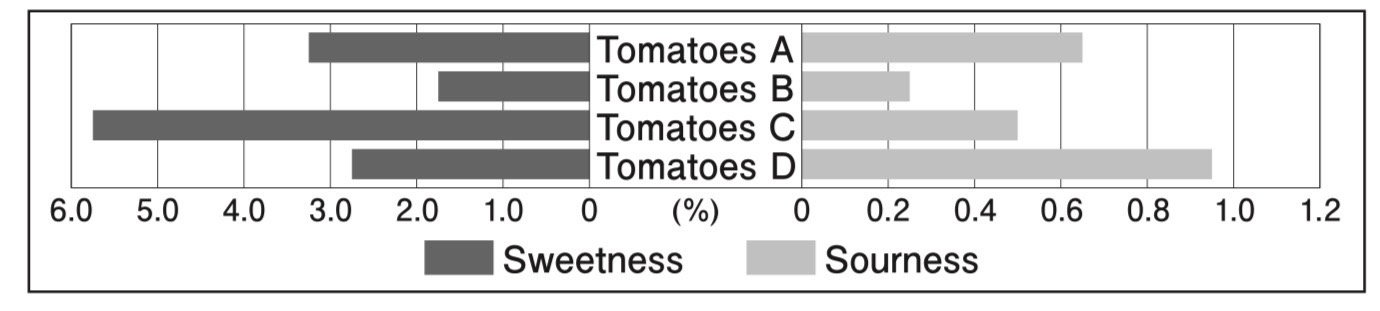
解答:Tomatoes(A) Tomatoes(C)
解説:下線部②が指す2種類のトマトは、最終的に「甘味と酸味のバランスが良かった」ジュースに使われたものです。本文から、まず「最も甘いトマト」をベースに使うことがわかります。グラフから、最も甘い(Sweetnessの棒が一番長い)のはトマトCです。次に、このトマトCよりも「酸っぱいトマト」を加えることにしましたが、「最も酸っぱいトマト」(グラフから酸味Sournessが一番強いトマトD)を加えたら酸っぱすぎたため、これは使われませんでした。最終的に使われたのは、最も甘いトマトCと、次に酸味が強いトマトAの組み合わせです。
問4 英文の内容に合っているものを、次のア~カから二つ選び、記号を書きなさい。
ア Kana said to her classmates that they had to use their tomatoes for the event.
イ Kana wanted to find how to make sweet tomato juice with her school tomatoes.
ウ Kana and her classmates needed a quarter of the year to get four kinds of tomatoes.
エ Kana and her classmates knew that good tomato juice didn’t have any sourness.
オ Kana realized that continuing to try different ways for the goal was important.
カ Kana felt happy because she could find the best way to make tomato juice by herself.
解答:ウ, オ
解説:
ア:不適切。カエデは「トマトジュースを作ろう」と提案し、皆が同意しましたが、「彼らのトマトを使わなければならない」と強制したわけではありません。
イ:不適切。「甘いトマトジュース」だけではなく、最終的に甘味と酸味の「バランス」が良いジュースを目指しました。
ウ:適切。本文に「4種類のトマトができるまでに3ヶ月かかった」とあります。「1年の4分の1」は3ヶ月を意味するため、内容と合っています。
エ:不適切。彼らは「おいしい」ジュースには酸味が必要だと考え、最終的に「甘味と酸味の素晴らしいバランス」を持つジュースを作りました。
オ:適切。本文の最後に、カエデが「答えを見つけるために、さまざまな方法で行動し続けることが重要だと学びました」と述べており、内容と一致します。
カ:不適切。クラスメイトと協力して達成した結果であり、一人で成し遂げたわけではありません。
問5 次の質問にあなたならどう答えるか。下線部③に入る5語以上の英語を書きなさい。
When do you feel proud of yourself?
I feel proud of myself when ③
解答:(例)I can communicate with foreign people in English.
解説:質問「When do you feel proud of yourself?」(あなたはどんな時に自分自身を誇りに思いますか?)に対して、下線部③に5語以上の英文で答えるという問題です。解答で重要なのは、「When…」で始まる質問に答えられるように、「〜する時」という文脈に合う文を書くことです。同様に、以下のような回答も可能です。
・I finish my difficult homework. (難しい宿題をやり終えた時)
・I can help someone who is in trouble. (困っている人を助けられる時)
・I learn something new and can use it. (何か新しいことを学び、それを使えるようになった時)
このように、「When…」という質問に対する答えとして、達成感や喜びを感じる瞬間を具体的に表現する英文を書けば正解となります。
■大問4
あなたは、旅行を題材にした授業を計画しているリー先生(Mr. Lee)から、アンケートで意見を求められた。「 」内の英文は、そのアンケートの一部である。あなたの考えを、【条件】にしたがって書きなさい。
「If you go to a city you have never visited, will you go with your family, with your friends, or alone? 」
【条件】
・最初の文は、I will go there [].を用いること。
その際、解答欄の[]の中には、with my family, with your friends, alone のいずれかを書くこと。
・あなたの考えを、理由とともに書くこと。
・最初の文は語数に含めずに、30語以上の英語で書くこと。
解答:(例)I will go there with my family. I feel very safe by being with my family because we can suppoet each other. I also want my brother to enjoy something new, such as eating some local foods.
解説:問題の条件に従って書けばよいでしょう。
[質問の和訳]
もしあなたが一度も訪れたことのない街に行くなら、家族と行きますか、友達と行きますか、それとも一人で行きますか?