■問題PDF
令和7年度_学力検査問題過去問【兵庫】- 英語
■目次
大問1
大問2
大問3
大問4
大問5
■大問1
これから聞き取りテストを行います。問題用紙の1ページを見てください。問題は聞き取りテスト1,2,3の3つがあります。答えは全て解答用紙の指定された解答欄の符号を〇で囲みなさい。聞きながらメモを取っても構いません。
[聞き取りテスト1]
聞き取りテスト1は、会話を聞いて、その会話に続く応答として適切なものを選ぶ問題です。それぞれの会話の場面が問題用紙に書かれています。会話のあとに放送される選択肢a~cの中から応答として適切なものを、それぞれ1つ選びなさい。会話と選択肢は1回だけ読みます。では、始めます。
No.1
[A:女性、B:男性]
A: Mr.sato, I don’t see Akira. Is he sick today?
B: No,he isn’t.
C: Then, where is he now?
(a) He has recovered very fast.
(b) He has a bad cold today.
(c) He is joining a tennis tournament outside.
解答 : c
解説 : この会話は、アキラさんの居場所を尋ねています。Aさんが「病欠ですか?」と尋ね、Bさんが「いえ、違います」と否定しています。Cさんが「では、彼は今どこにいるのですか?」と、現在の居場所について具体的に尋ねています。この質問に対する適切な応答は、アキラさんが現在どこで何をしているのかを説明する選択肢です。(a)「彼はとても早く回復しました。」:病気ではないと既にBさんが答えているため、この応答は不自然です。(b)「彼は今日ひどい風邪をひいています。」:Bさんが病欠を否定しているため、この応答は矛盾します。(c)「彼は今、外でテニスのトーナメントに参加しています。」:アキラさんが学校にいない理由と現在の活動を説明しており、Cさんの質問に対する適切な答えとなります。
No.2
[A: 女性, B: 男性]
A: Hi, Sam. Your cap is very cool.
B: Thank you. I especially love the color.
A: How did you get it?
(a) I sent it to my cousin in America.
(b) My favorite cap was blue.
(c) It was a birthday present from my father.
解答 : c
解説 : Aさんはサムのキャップを褒めた後、「どうやって手に入れたの?」と尋ねています。これは、キャップの入手方法について尋ねる質問です。(a) 「それをアメリカのいとこに送ったんだ。」:これはキャップを「送った」話であり、サムが「どう手に入れたか」の答えになっていません。(b) 「僕のお気に入りのキャップは青色だった。」:これはキャップの色についての話であり、入手方法の答えになっていません。(c) 「父からの誕生日プレゼントだったんだ。」:これはキャップを誕生日プレゼントとしてもらったという入手方法を具体的に説明しており、Aさんの質問に対する適切な答えとなります。
No.3
[A: 女性, B: 男性]
A: Mom, can you wake me up at 5 a.m. tomorrow?
B: That’s so early! Why?
A: I’ll have an English test in the first period.
(a) Then, you should go to bed early tonight.
(b) Wow, it’s a good idea for me to study English after lunch.
(c) So, you can leave home at four thirty in the morning.
解答 : a
解説 : Aさんは明日朝早く起きる必要がある理由として、1時間目に英語のテストがあることを説明しています。これに対し、Bとして適切な応答を選ぶ問題です。(a) 「ならば、今夜早く寝るべきよ。」:早起きしなければならない理由がわかった上で、早く寝るように促すのは、Aさんの体調を気遣う母親として非常に自然で適切なアドバイスです。(b) 「わあ、私がお昼ご飯の後に英語を勉強するのは良い考えだわ。」:Aさんの状況とは関係なく、Bさん自身の学習計画について話しており、会話の流れに合いません。(c) 「それで、君は朝の4時30分に家を出られるね。」:Aさんが家を出る時間について言及しておらず、また、テストのために早起きするのであって、家を早く出ることに直接つながるわけではないため、不自然な応答です。
[聞き取りテスト2]
聞き取りテスト2は、会話を聞いて、 その内容についての質問に答える問題です。それぞれ会話のあとに質問が続きます。その質問に対する答えとして適切なものを、問題用紙のa~dの中からそれぞれ1つ選びなさい。会話と質問は2回読みます。では、始めます。
No.1
〔A:男性、B:女性〕
A: Did you go to the new café near the beach?
B: Yes, I loved the taste of the coffee and the nice view.
A: Great. Is it expensive?
B: Yes, but I think it’s the best café in this town.
A: I want to go there, too.
B: Let’s go together next time. I’d like to try the delicious cakes.
(Question) What did the woman think about the café?
a The facility was old.
b The food was cheap.
c The drink was delicious.
d The view was not good.
解答 : c
解説 : 質問は「その女性はカフェについてどう思いましたか?」です。会話の中で女性(B)は以下のように述べています。「Yes, I loved the taste of the coffee and the nice view.(うん、コーヒーの味が気に入ったし、景色も素敵だったわ。)」「Yes, but I think it’s the best café in this town.(ええ、でもこの町で一番良いカフェだと思うわ。)」これらの発言と選択肢を比較します。a. The facility was old.(施設が古かった。)女性は「nice view(素敵な景色)」と言っており、施設が古いという言及はありません。b. The food was cheap.(食事が安かった。)男性が「Is it expensive?(値段は高いの?)」と尋ねたのに対し、女性は「Yes, but…(ええ、でも…)」と答えており、高いことを示唆しています。安かったとは言っていません。c. The drink was delicious.(飲み物がおいしかった。)女性は「I loved the taste of the coffee(コーヒーの味が気に入った)」と明確に述べています。コーヒーは飲み物の一種です。したがって、女性がカフェについてどう思ったかを表す最も適切な選択肢は c です。
No.2
〔A:男性、B:女性〕
A:Doctor, I have a stomachache.
B:When did it start?
A: This morning, after breakfast.
B: What did you eat? Did you drink something cold?
A: I only had eggs and salad.
B:I see. I’ll give you some medicine. If the pain continues, come again.
(Question) When did his pain begin?
a After drinking water.
b After breakfast.
c After lunch.
d After dinner.
解答 : b
解説 : 質問は「When did his pain begin?(彼の痛みはいつ始まりましたか?)」です。会話の中でAさん(男性)は、Bさん(医師)の質問「When did it start?(いつから始まりましたか?)」に対して、「This morning, after breakfast.(今朝、朝食の後です。)」と明確に答えています。したがって、彼の痛みが始まったのは b. 朝食の後。 です。
No.3
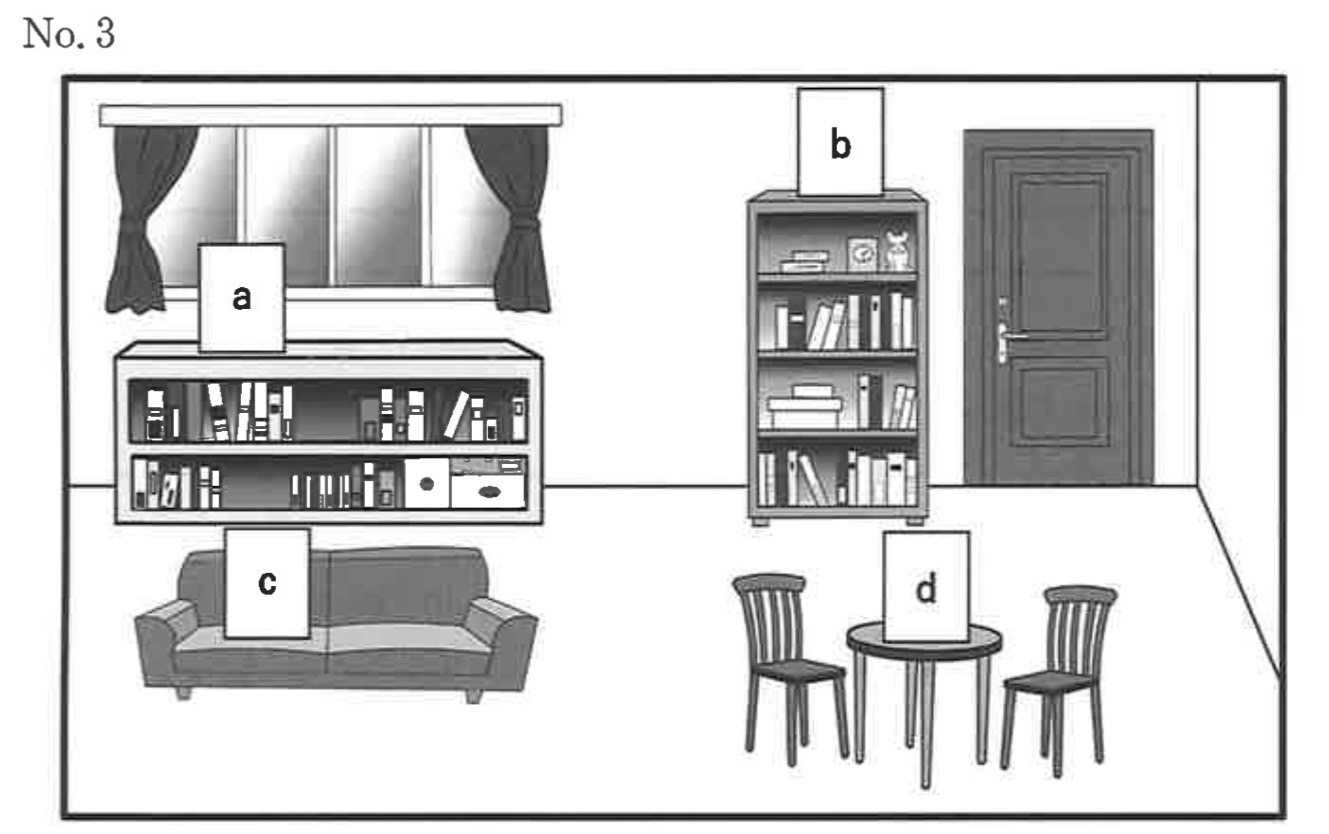
〔A:女性、B:男性〕
A: Where should we put the vase?
B: How about putting it on the table?
A:The space is too small. We can put it on the shelf next to the door.
B: But, if it falls from the tall shelf, it will be broken.
A: Well, let’s put it on another shelf by the window.
B: The one behind the sofa? Perfect!
(Question) Where did they decide to put the vase?
解答 : a
解説 : この会話は、花瓶を置く場所についてAさんとBさんが話し合っている様子です。Aが最初に「どこに置くべきか?」と尋ねる。Bが「テーブルの上」を提案するが、Aが「スペースが小さすぎる」と却下する。Aが次に「ドアの横の棚」を提案するが、Bが「高い棚から落ちる」と心配して却下する。Aが最終的に「窓のそばの別の棚」を提案する。Bがそれを「ソファの後ろにある棚ですね?完璧だ!」と確認し、同意する。このやり取りから、最終的に二人が同意した場所は「窓のそばの別の棚」であり、それがa「ソファの後ろにある棚」と確認されています。
[聞き取りテスト3]
聞き取りテスト3は、英語による説明を聞いて、その内容についての2つの質問に答える問題です。英文と選択肢は2回読みます。では、始めます。
【男性の放送文】
Good morning, everyone! Do you like science? I love it very much and I studied it in university. Do you know that science is everywhere in your daily life? Thanks to science, you can use your tablet, ride a bike, and cook food. We use it for the weather forecast, too. By studying science, we can understand how these things work. Science is not just something we learn in school. It’s connected with our daily lives. I hope you’ll like science like me.
Question 1: What does the speaker say about science?
(a) It’s very difficult for students.
(b) It’s helpful to enter a university.
(c) It’s studied only in school.
(d) It’s everywhere in our daily lives.
解答 : d
解説 : Question 1 は「話し手は科学について何と言っていますか?」という質問です。男性の説明内容から、科学について述べられている箇所を探します。男性はスピーチの中で以下の点を述べています。「Do you know that science is everywhere in your daily life?」 (皆さんの日常生活のいたるところに科学があることを知っていますか?)「Science is not just something we learn in school. It’s connected with our daily lives.」 (科学は学校で学ぶだけのものではありません。それは私たちの日常生活とつながっています。)これらの発言と選択肢を比較します。a. それは生徒にとってとても難しい。(It’s very difficult for students.)このような言及はありません。b. それは大学に入るのに役立つ。(It’s helpful to enter a university.)話し手は大学で科学を学んだと述べていますが、大学に入るのに役立つとは言っていません。c. それは学校でのみ勉強される。(It’s studied only in school.)話し手は「Science is not just something we learn in school.」と明確に否定しています。d. それは私たちの日常生活のいたるところにある。(It’s everywhere in our daily lives.)話し手は「science is everywhere in your daily life?」と問いかけ、その後も日常生活とのつながりを強調しています。これは男性の発言と一致します。したがって、Question 1 の答えとして適切なものは d です。
Question 2: What is the speaker’s hope for students?
(a) Using a tablet in science classes.
(b) Writing a book on science fiction.
(c) Being interested in science.
(d) Finding a new recipe through science.
解答 : c
解説 : Question 2 は「話し手が生徒たちに望んでいることは何ですか?」という質問です。男性のスピーチの最後の部分に、彼の希望が述べられています。男性はスピーチの結びに「I hope you’ll like science like me.(私のように科学が好きになってくれることを願っています。)」と述べています。この発言と選択肢を比較します。a. 理科の授業でタブレットを使うこと。(Using a tablet in science classes.)タブレットが科学のおかげで使えるとは言っていますが、授業で使うことを望んでいるわけではありません。b. 科学フィクションの本を書くこと。(Writing a book on science fiction.)このような言及はありません。c. 科学に興味を持つこと。(Being interested in science.)「私のように科学が好きになってくれることを願っています」という発言は、生徒たちが科学に興味を持つこと、科学を好きになることを望んでいるということを意味します。これは男性の発言と一致します。d. 科学を通じて新しいレシピを見つけること。(Finding a new recipe through science.)料理ができるのは科学のおかげだとは言っていますが、新しいレシピを見つけることを望んでいるわけではありません。したがって、Question 2 の答えとして適切なものは c です。
■大問2
高校生のかずやさん、オーストラリアで同じ高校に通うビクトリアさんとブレイクさん、生徒会担当の石田先生が生徒会での取組や課題について、オンラインで意見交換をしています。次の英文を読んで、あとの問いに答えなさい。
Ms., everyone. Today, we are going to talk about school activities.
。 This year, we focused on the rules in our school. Our student council collected opinions from all the students and discussed which rules we should change. I think we will be more responsible for our behavior if we improve the rules by ourselves. Now, we are happy with the new rules.
Ms. did a good job. Sometimes, it is important to① and use students’ ideas to change them. Tell us about your school, Victoria.
student council planned the school dance festival. When we showed our plans to the students, they often had different opinions. We listened to their opinions carefully because we wanted them to enjoy our event. We tried to see things from the various points of view of all the students in our school. As a team, we played an important part for the event.
Ms.。 You are a good leader! I imagine the students could ② because of your efforts. How about you, Blake?
Victoria said, respecting different opinions is important for success. After talking about the details of the event, we needed to do some things right away. lot of trouble…..
Ms. effort! I would like to③. They must be interesting! I believe being a leader at school will be a valuable experience for students like you. Don’t worry about your mistakes.
(注) student council 学生会
1. 文中の①②③ に入る適切なものを、次のア~オからそれぞれ1つ選んで、その符号を書きなさい。
ア make the same mistakes
イ enjoy the dance event
ウ have a sense of humor
エ I watch the videos you made
オ consider the rules
解答 : ①オ ②イ ③エ
解説 : ①:石田先生が、和也さんの学校がルールを変えたことについて「よくやりましたね」と評価しています。その後に「時には、① [空欄] し、生徒たちのアイデアを使ってルールを変えることが大切です」と続いています。生徒の意見を使ってルールを変えるという文脈から、ルールを「検討する」ことが適切です。オ consider the rules(ルールを検討する)が最も適しています。②:ビクトリアさんが、生徒会がダンスフェスティバルを計画し、生徒の意見を注意深く聞いたと話しています。それは「生徒たちにイベントを楽しんでもらいたかったから」だと述べています。石田先生はそれを受けて、「あなたの努力のおかげで、生徒たちは② [空欄] できたことでしょう」と述べています。努力の結果として生徒がイベントを楽しめた、と考えるのが自然です。イ enjoy the dance event(ダンスイベントを楽しむ)が最も適しています。③:ブレイクさんの発言の途中で会話が途切れていますが、石田先生は「よく頑張りましたね!」とブレイクさんの努力を評価し、「私は③ [空欄]。それはきっと面白いでしょうね!」と続けています。「それはきっと面白いでしょうね!」という発言から、③には何か興味を引くもの、例えばブレイクさんが作ったものや記録されたものに関する内容が入ると推測できます。エ I watch the videos you made(あなたが作ったビデオを見たい)が最も適しています。
2. 発現の内容に合うように、次の(1)(2)の「 」に入る適切なものを、あとのア~カからそれぞれ1つ選んで、その符号を書きなさい。
(1) 「」talking about the school festival.
(2) 「」talking about the experience of changing rules.
ア Only Kazuya is
イ Only Victoria is
ウ Only Blake is
エ Kazuya and Victoria are
オ Kazuya and Blake are
カ Victoria and Blake are
解答 : (1)カ (2)ア
解説 : ・和也 (Kazuya): 学校のルールを変えた経験について話しています。「This year, we focused on the rules in our school. Our student council collected opinions from all the students and discussed which rules we should change.」・ビクトリア (Victoria): 学校のダンスフェスティバルを計画したことについて話しています。「Our student council planned the school dance festival.」彼女は意見を聞き、イベントを成功させるために努力したことを述べています。・ブレイク (Blake): ビクトリアが言ったイベント(ダンスフェスティバル)について、異なる意見を尊重することの重要性や、詳細を話し合った後の具体的な行動について話しています。「As Victoria said, respecting different opinions is important for success. After talking about the details of the event, we needed to do some things right away.」(1)和也はルールについて話しています。ビクトリアは「school dance festival」について話しています。ブレイクはビクトリアの発言を受けてイベント(ダンスフェスティバル)について話しています。したがって、学校祭(school festival)について話しているのは、ビクトリアとブレイクです。(2)和也は、生徒会が学校のルールに焦点を当て、ルールの変更について話し合った経験について詳しく述べています。ビクトリアとブレイクは、ダンスフェスティバルというイベントについて話しており、ルールの変更については話していません。したがって、ルールの変更の経験について話しているのは、和也だけです。
3. かずやさんは、意見交換をした次の日にビクトリアさんとブレイクさんにメールを書きました。本文の内容に合うように、「あ」、「い」に入る適切なものを、あとのア~エからそれぞれ1つ選んでその符号を書きなさい。
[To Victoria; Blake
From Kazuya
Subject Thank you.
Dear Victoria and Blake,
Thank you for the meeting yesterday! After the meeting, I have been thinking about the skills school leaders need. I have some questions for you.
Victoria, あ? You said that students in your school often had different opinions.
Blake, い I want to make them for my school, too.
Please give me some advice. Thank you for your help.
Your friend,
Kazuya]
ア how long did it take to create videos for the event
イ when were the old rules changed in your school
ウ what were the effective ways to choose good ideas
エ why did the students ask you to become a leader
解答 : あ ウ い ア
解説 : 「あ」について(ビクトリアへの質問)「ビクトリア、あ? あなたは、あなたの学校の生徒たちがよく異なる意見を持っていたと言いましたね。」ビクトリアは、生徒会がダンスフェスティバルを計画した際、生徒たちがよく異なる意見を持っていたと述べていました。和也は、この「異なる意見」という点を受けて質問をしています。異なる意見をまとめる際に重要なのは、良いアイデアを選ぶ方法です。ア 「イベントのためにビデオを作るのにどれくらいの時間がかかりましたか」:ビクトリアの「異なる意見」という話とは直接関係ありません。イ 「あなたの学校ではいつ古いルールが変更されましたか」:ビクトリアはルールの変更ではなく、ダンスフェスティバルについて話していました。ウ 「良いアイデアを選ぶ効果的な方法はなんですか」:生徒の異なる意見の中から、どのアイデアを採用したのか、その方法を尋ねるのは自然な流れです。エ 「生徒たちはなぜあなたにリーダーになるよう頼んだのですか」:リーダーになった経緯は、意見の集約方法とは異なります。したがって、「あ」には ウ が適切です。「い」について(ブレイクへの質問)「ブレイク、い。私も自分の学校のためにそれらを作りたいです。」ブレイクは前回の会議で、イベントの詳細を話し合った後、「we needed to do some things right away. lot of trouble…..」と、その後の作業について言及し、石田先生は「I would like to [③]. They must be interesting!」と、ブレイクが作った「それら(They)」に興味を示していました。この「それら(They)」とは、ブレイクがイベントのために作ったであろうビデオなどの記録物だと推測されます。和也が「私も自分の学校のためにそれらを作りたいです」と言っていることから、ブレイクが言及した何か(ビデオなど)について尋ねていると考えられます。ア 「イベントのためにビデオを作るのにどれくらいの時間がかかりましたか」:ブレイクがイベントのための「何か」について言及し、和也が「それらを作りたい」と言っているので、ビデオ作成にかかった時間を尋ねるのは非常に自然です。イ 「あなたの学校ではいつ古いルールが変更されましたか」:ブレイクはルール変更について話していませんでした。ウ 「良いアイデアを選ぶ効果的な方法はなんですか」:これはビクトリアへの質問の文脈であり、ブレイクへの質問としては不適切です。エ 「生徒たちはなぜあなたにリーダーになるよう頼んだのですか」:リーダーになった経緯は、何かを「作りたい」という和也の意図とは関係ありません。したがって、「い」には ア が適切です。
■大問3
次の英文を読んで、あとの問いに答えなさい。
[1] How do you use the library in your town? Many people think it is a place to borrow books or study quietly. However, these days, some libraries have started providing many kinds of events and services to ① people in the community. Let’s see their unique challenges.
[2] One library invites foreign residents in the town to an interesting event. In the event, they read books in their own languages for the children of the town. A university student from China read picture books in Chinese and Japanese for them. After reading the books, the children enjoyed some quizzes about them. The student also taught the children greetings, songs, and how to count numbers in Chinese. The children could enjoy the stories and learn words and expressions at the same time. This event ②.
[3] Another library has an event which gives young people a chance to learn many things from elderly people. In one event, a man told children an old folk tale from the local area. It was about the origin of their town. An old woman also taught young people how to make handmade miso. Everyone was moved by the taste of the miso. The secret was to use local soybeans and put them in water for a long time. Young people could learn the history and wisdom that remain in the local area. This event connects people between different generations.
[4] Another library offers a service to people who cannot read well. To support them, many volunteers read books aloud. In this volunteer activity, it is necessary to use special skills like pronouncing words clearly, explaining pictures well, etc. So, the library provides workshops to improve the volunteers’ skills. After they learn these skills, they will be able to read books aloud to people who need help. Also, they will be able to record their voices for people who cannot come to the library. Everyone has access to the recorded voices on the Internet. This service makes the library useful to many people.
[5] Thanks to these events and services, the number of people who come to libraries is increasing. One of the roles of libraries is to offer many kinds of books and a lot of information to people. want to visit to find new friends in your community?
(注) picture books 絵本 folk tale 民話 workshops講習会
1. 文中の① に入る適切なものを、次のア~エから1つ選んで、その符号を書きなさい。
ア observe and trust
イ gather and connect
ウ recognize and separate
エ judge and refuse
解答 : イ
解説 : 空欄①は、[1]段落の「However, these days, some libraries have started providing many kinds of events and services to ① people in the community.」にあります。文脈は、図書館が「地域社会の人々」に対して、イベントやサービスを提供し始めているというものです。これは、地域の人々を対象とし、彼らを何らかの形で図書館に呼び込んだり、関係性を築いたりする目的があると考えられます。ア : イベントやサービスを提供することと、「観察し信頼する」という行動は直接結びつきません。イ : 図書館が地域の人々を「集め」、イベントやサービスを通じて人々を「結びつける」という目的は、文脈に非常に合致します。後の段落で、外国人住民と子供たちが交流するイベントや、若者と高齢者が繋がるイベントが紹介されています。ウ : 人々を認識することはあり得ますが、「分離する」ことはイベントやサービスの目的とは逆行します。エ : 人々を「判断したり拒否したり」することは、サービス提供の目的とは全く異なります。したがって、空欄①に入る最も適切なものは、図書館が地域の人々を呼び込み、交流させるという役割を果たすことを示す「gather and connect」です。
2. 文中の②に入る適切なものを、次のア〜エから1つ選んで、その符号を書きなさい。
ア lets librarians check what their users want to read
イ shows foreign residents how to borrow books from libraries
ウ gives young parents some advice to read books to their children
エ helps children understand various languages and cultures
解答 : エ
解説 : ア : イベントの目的とは異なります。イ : 外国人住民は本を読み聞かせる側であり、借り方を示すのが目的ではありません。ウ : 親ではなく、子供たちが直接参加して異文化に触れるイベントです。エ : これはイベントの具体的な内容(母国語での読み聞かせ、中国語を教える、物語を楽しむ、言葉や表現を学ぶ)と一致しており、イベントの最も適切な目的を説明しています。したがって、空欄②に入る最も適切なものは エ です。
3. 次の英文は、本文中で示された図書館の取組に参加した生徒たちが、英語の授業で書いた感想です。段落[3]、段落 [4] のイベントやサービスについての感想として適切なものを、次のア~カからそれぞれ2つずつ選んで、その符号を書きなさい。
アIt was very difficult to understand the books at first because there were some words I did not know. Quizzes helped me understand these words.
イThe taste reminded me of my grandmother. She used to cook a delicious soup for our family. I think the recipe is a treasure. We should protect it for the future.
ウI enjoyed the old stories written in Chinese. The pictures in the stories were colorful and they were very attractive to me.
エI have never imagined such wonderful reading skills. I learned there were many skills to tell stories better to other people.
オI read some books and recorded my voice on my computer. I could not hear my recorded voice well. So, I think I need more practice.
カI am very glad to listen to the stories from people of different ages. I will borrow books about our town’s history.
解答 : [3]イカ [4]エオ
解説 : [段落[3]のイベントやサービスについての感想]段落[3]は、若者が高齢者から地元の民話や手作り味噌の作り方を学ぶイベントについてです。異なる世代の人々が繋がり、歴史や知恵を学ぶという内容です。イ:味噌の味から祖母を思い出し、レシピを宝物として守るべきだと述べているのは、手作り味噌のイベント(段落[3])の内容に合致します。また、「レシピは宝物」「将来のために守るべき」という部分は、「歴史と知恵が残る」という段落[3]のテーマとも関連します。カ:異なる年齢の人々から話を聞く喜びを感じ、町の歴史に関する本を借りようと考えているのは、民話や歴史を学ぶイベント(段落[3])の内容と一致します。特に「異なる年齢の人々」という表現は、世代間の繋がりを強調する段落[3]の最後の文とも合致します。[段落[4]のイベントやサービスについての感想]段落[4]は、読書が苦手な人への読み聞かせ支援と、ボランティアのスキル向上、音声の録音とインターネット公開に関するサービスについてです。エ:朗読スキルに驚き、物語を上手に伝えるための多くのスキルがあると学んだという内容は、ボランティアが読み聞かせの「特別なスキル」を使うこと、そしてそのスキル向上のための「講習会」があるという段落[4]の内容と一致します。オ:本を読み、自分の声をコンピュータに録音し、もっと練習が必要だと考えている内容は、ボランティアが本を録音する活動があること、そしてそれがスキルを要する(講習会でスキルを向上させる)活動であるという段落[4]の内容と一致します。[それ以外の選択肢]ア:「クイズ」は段落[2]の外国人住民による読み聞かせイベントの内容です。ウ:「中国語で書かれた古い物語」や「カラフルな絵」は、段落[2]の外国人住民による読み聞かせイベント(中国からの学生が中国語と日本語の絵本を読んだ)の内容です。
■大問4
高校生のあかねさんとイギリスのロンドンからの留学生ボールさんが、一緒に下校しています。次の英文を読んで、あとの問いに答えなさい。
Akane: It was rainy and windy yesterday. My umbrella was broken by the strong wind.
Paul: ① I saw a lot of people who were in trouble like you.
Akane Oh, really? How was your umbrella?
Paul: In fact,②.
Akane: What?
Paul: I don’t think many people in London use umbrellas. Instead, they wear jackets or coats that dry quickly.
Akane: If I do that,③.But I want to carry a tough umbrella that I can use even in strong wind.
Paul: I’ve never heard of it. Is there an umbrella like that?
Akane: Yes, it has more ribs than common umbrellas and they are made of a very strong material.
Paul: Sounds interesting.
Akane: There are more interesting umbrellas。 For example, there is an umbrella which dries immediately. Rain drops don’t stay on it. So, we don’t have to bring wet umbrellas into buses, trains, or buildings.
Paul: That’s very convenient. By the way, last summer, I noticed many people were using their umbrellas though it wasn’t raining. Why was that?
Akane: They use them to protect themselves from sunshine.
….④.
Akane: I can understand your feelings, but there is a useful umbrella. It’s very light and becomes so small when it is folded. You can use it on both sunny days and rainy days.
、that’s very nice. There are many kinds of umbrellas. How creative!
Akane: Thanks to them, we can feel comfortable any day.
Paul: Yes, I respect the people who invented such umbrellas. I’ll go shopping and look for an umbrella this weekend. Oh, it started raining!
Akane: I can’t believe it! The weather news this morning said that it wouldn’t be rainy today. If I had my umbrella, I would share it with you.
Paul: Thank you. Anyway, let’s hurry to the station!
(注) dry 乾く ribs (傘の)骨
1. 文中の①に入る適切なものを、次のア〜エから1つ選んで、その符号を書きなさい。
ア It’s my turn
イ Here you are
ウ That’s too bad
エ I’m against it
解答 : ウ
解説 : 空欄①は、あかねさんが「傘が強風で壊れた」と話した直後にポールさんが発言する部分です。ポールさんはその後に「君みたいに困っている人をたくさん見かけたよ」と続けています。あかねさんが困っている状況を聞いて、ポールさんがどのような感情を示すのが自然かを考えます。ア 会話の番を示す表現で、文脈に合いません。イ 物を渡すときの表現で、文脈に合いません。ウ 相手の不幸な状況に対して「それは残念だね」「お気の毒に」という共感や同情を表す表現です。あかねさんの傘が壊れたことに対して、この表現は非常に自然です。エ 何かに反対するときに使う表現で、文脈に合いません。したがって、空欄①に入る最も適切なものは ウ です。
2. 文中の② に入る適切なものを、次のア〜エから1つ選んで、その符号を書きなさい。
ア I carry an umbrella everywhere
イ I can’t carry your broken umbrella
ウ I don’t usually use an umbrella
エ I have another umbrella you can use
解答 : ウ
解説 : 空欄②は、あかねさんの「あなたの傘はどうだった?」という質問に対するポールさんの答えです。その直後、あかねさんが「何?」と驚き、ポールさんがその理由として「ロンドンの多くの人は傘を使わないと思うんだ。代わりに、すぐに乾くジャケットやコートを着るんだよ」と説明しています。この会話の流れから、ポールさんは自分の傘がどうだったか、または傘の使用習慣について答えていると考えられます。ア もし傘を持ち歩いているなら、あかねさんの傘が壊れたことに対して困っている人を見たことに驚くかもしれませんし、ロンドンの習慣と矛盾します。イ あかねさんの傘が壊れた話はしていますが、ポールさんがそれを運べないという話は文脈に合いません。ウ「私は普段、傘を使いません」という発言は、その後のロンドンの習慣(傘を使わず、代わりにジャケットなどを着る)についての説明と完全に合致します。あかねさんが「What?」と驚いたのも、一般的な日本人とロンドン市民の習慣の違いを示していると考えられます。エ 傘が壊れたあかねさんへの提案ですが、その後にロンドンの習慣を説明する流れとは繋がりません。したがって、空欄②に入る最も適切なものは ウ です。
3. 文中の③、④に入る適切なものを、次のア~エからそれぞれ1つ選んで、その符号を書きなさい。
ア I want you to bring an umbrella that we can use together
イ I don’t want to carry an umbrella just for that purpose
ウ I will ask my mother to buy a new umbrella tomorrow
エ I won’t have to worry about using an umbrella in the wind
解答 : ③エ ④イ
解説 : ③について(あかねさんの発言)ポールさんが「ロンドンの多くの人は傘を使わず、代わりにすぐに乾くジャケットやコートを着る」と述べたのに対し、あかねさんは「If I do that,③. But I want to carry a tough umbrella that I can use even in strong wind.」と返しています。「If I do that(もし私がそうしたら)」は、傘を使わずにジャケットやコートだけで済ますこと」を指します。その結果として起こること、そして「でも(But)」と続くことから、それが好ましくないことであると推測できます。また、その後に「強風でも使える丈夫な傘を持ちたい」と続いていることから、傘を使わないことによる不便さや問題点が示唆されます。ア:文脈に合いません。イ:これは、晴れの日に日差し避けとして傘を使うことへのポールの感想で出てくる可能性のあるセリフであり、あかねさんが「傘を使わない」ことに対する自分の意見としては不自然です。ウ:傘が壊れたこととは関連しますが、「If I do that」の帰結としては不自然です。エ:この流れは論理的に成り立ちます。傘を使わないという選択肢を取れば、傘が風で壊れるという問題からは解放される。しかし、それでもなお、自分は強風に耐えられる傘が欲しい、という本音を述べています。④について(ポールさんの発言)あかねさんが「(傘を)日差しから身を守るために使う」と説明したのに対し、ポールさんは「Um….④.」と答えています。その直後、あかねさんが「I can understand your feelings, but there is a useful umbrella. It’s very light and becomes so small when it is folded. You can use it on both sunny days and rainy days.」と、日傘にもなる軽量・コンパクトな傘があることを説明しています。あかねさんが「I can understand your feelings(気持ちはわかる)」と言っていることから、ポールさんは日傘を使うことに対して、何らかの違和感や抵抗感を表明していると推測できます。ア :文脈に合いません。イ :「そのためだけに(just for that purpose)」は、日差しを防ぐためだけに傘を持ち歩くことへの抵抗を示しており、ポールの発言として非常に自然です。あかねさんが「気持ちはわかるけど、便利な傘があるよ」と返していることからも、この内容が適切です。ウ :文脈に合いません。エ :これは傘が壊れることへの心配に関する内容で、日傘の文脈には合いません。
4. 下線部について、あかねさんが、この発言をした理由として適切なものを、次のア~エから1つ選んで、その符号を書きなさい。
ア Because Akane didn’t think she needed her umbrella.
イ Because Akane didn’t know about the latest umbrella.
ウ Because Paul didn’t have an umbrella.
エ Because Paul didn’t decide to buy an umbrella.
解答 : ア
解説 : ・ポール: Oh, it started raining! (ああ、雨が降ってきた!)・あかね: I can’t believe it! The weather news this morning said that it wouldn’t be rainy today. (信じられない!今朝の天気予報では今日は雨じゃないって言ってたのに。)ここであかねさんは、「天気予報が雨ではないと言っていたから、傘を持ってきていない(必要ないと思っていた)」という状況を明確に示しています。そして、その結果として「If I had my umbrella, I would share it with you.」という発言に繋がります。つまり、あかねさんが「傘を持っていたら相合い傘したのに」と、現実に傘がないことを残念がっているのは、彼女自身がその日傘が必要ないと考えて持参しなかったためです。ア Because Akane didn’t think she needed her umbrella. (あかねは自分の傘が必要だとは思っていなかったから。)これが、あかねさんがその時傘を持っていない直接的な理由です。傘がないから相合い傘ができず、そのことを残念がっているのです。天気予報を信じて傘が必要ないと考えていたため、傘を持ってこなかった、という背景まで含意しています。したがって、あかねさんの発言(「もし傘を持っていたら相合い傘したのに」)の理由としては、「傘が必要だとは思っていなかったので、持っていなかった」という彼女自身の行動の背景が最も適切です。
5. ポールさんは、あかねさんとの会話を思い出しながら日記を書きました。本文の内容に合うように、次のあ、いに、あとのそれぞれの「」内の語から4語を選んで並べかえ, 英文を完成させなさい。
Today, I talked with Akane about many kinds of umbrellas. They あ very impressed. When people create a new product, they consider me. I was い our daily lives better with it. Someday, I’d like to invent many products people want to use.
あ were did not to familiar
い make how can they what
解答 : あ were not familiar to い how they can make
解説 : [空欄「あ」の完成]文脈:「傘について話した。それらは あ とても感動した。」日記の主語は「I」ですが、「They」と複数形になっているので、これは「多くの種類の傘(many kinds of umbrellas)」または傘の発明品全体を指していると考えられます。選択肢の「were」「did」「not」「to」「familiar」を組み合わせます。「not familiar to me」で「私にはなじみがなかった/知らなかった」という意味になります。「They were not familiar to me」とすると、「それらは私にはなじみがなかった」となり、その後に「とても感動した(very impressed)」と続くのは自然な流れです。したがって、「あ」に入る並べ替えた英文は:were not familiar to [空欄「い」の完成]文脈:「私は い それで私たちの日常生活をより良くする。」選択肢の「make」「how」「can」「they」「what」を組み合わせます。「how they can make」で「それらがどのように作ることができるか」または「それらがどのように~するか」という意味になります。「I was impressed (by) how they can make our daily lives better with it.」と考えると、感動した内容として、「傘が私たちの日常生活をいかに良くできるか」という構造が自然です。したがって、「い」に入る並べ替えた英文は:how they can make
■大問5
次の各問いに答えなさい。
1. 次の英文は、留学生のアルシアさんが、部活動で経験したことを英語でレポートに書いた内容です。①~③に入る英語を、あとの語群からそれぞれ選び、必要に応じて適切な形に変えたり、不足している語を補ったりして、英文を完成させなさい。ただし、2語以内で答えること。
I belong to the Japanese calligraphy club. I thought Japanese calligraphy was very difficult because I was not good at writing kanji. My teacher told me ①practicing, so I wrote kanji for two hours every day. At first, my work did not ②nice, but I never gave up. Last week, the cultural festival ③ and I joined it with my club members. I was nervous, but our performance was successful. Japanese calligraphy taught me the importance of making an effort. Now, I am confident and I want to try more new things.
hold write keep see look
解答 : ①to keep ②look ③was held
解説 : ①:「先生は私に [空欄] 練習するように言った。だから毎日2時間漢字を書いた。」「practicing」という動名詞が続いているので、「~し続ける」という意味の動詞が必要です。語群に「keep」があります。「keep ~ing」で「~し続ける」という意味になります。keep practicing (練習し続ける)したがって、①に入るのは「to keep」です。②:「最初、私の作品は [空欄] 良くなかったが、決して諦めなかった。」「did not」の後に続くので、動詞の原形が必要です。「nice」という形容詞があるので、「~に見える」という意味の動詞が適切です。語群に「look」があります。「look nice」で「良く見える」という意味になります。look nice (良く見えなかった)したがって、②に入るのは「look」です。③:「先週、文化祭が [空欄]、私はクラブの仲間とそれに参加した。」文化祭が「開催された」という意味になるようにします。語群に「hold」があります。「hold」は「開催する」という意味ですが、文化祭が「開催される」という受動的な意味合いになるので、受動態の形にするか、あるいは「be held」という形になります。過去形なので「was held」となります。was held (開催された)したがって、③に入るのは「was held」です。
2. 高校生のももかさんと留学生のルーカスさんが、下の記事A、記事Bを見ながら会話をしています。次の会話について、英文や記事の内容に合うように、( ① )~( ⑤ ) にそれぞれ適切な英語1語を入れて、会話文を完成させなさい。
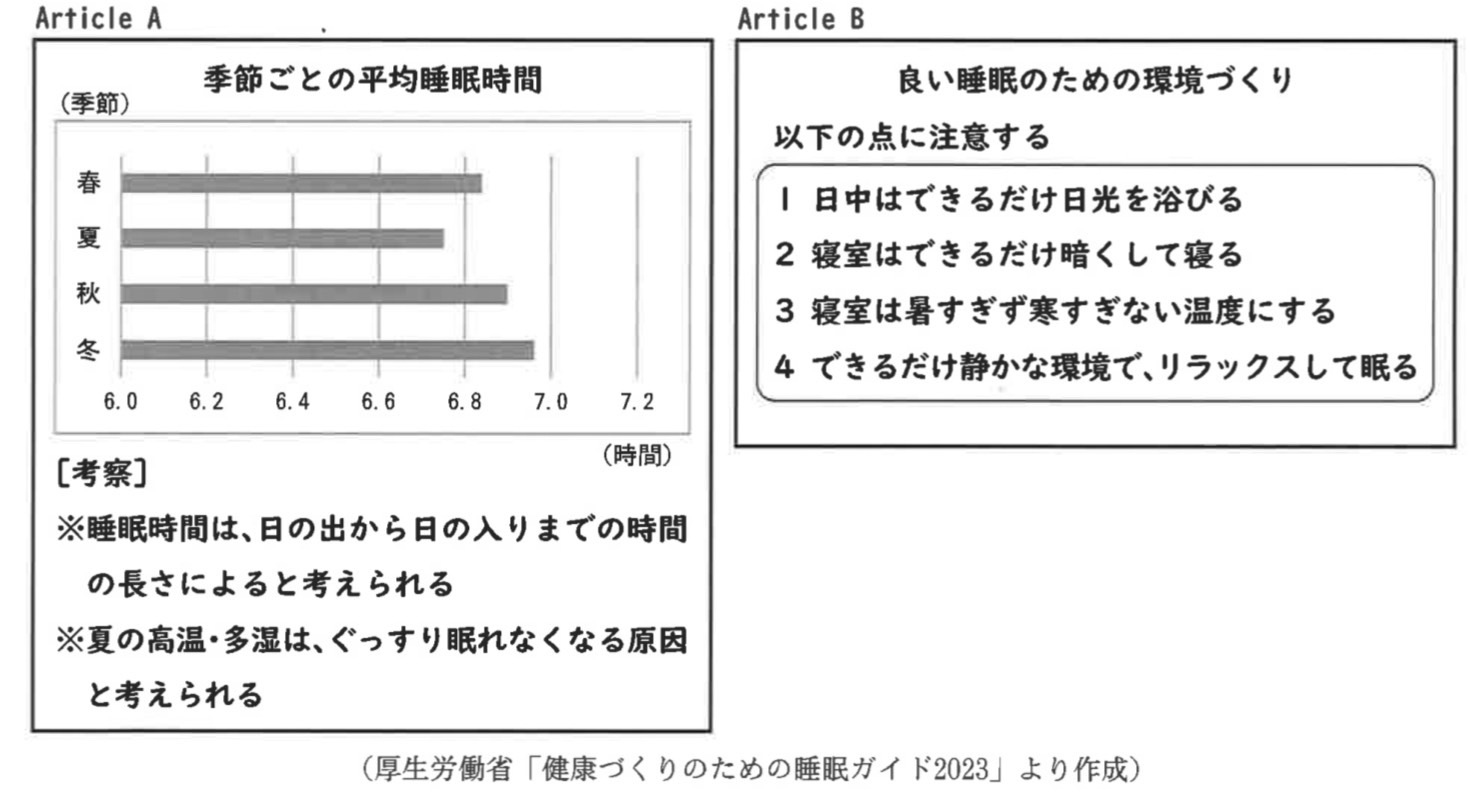
Momoka: I’m interested in these articles about sleeping. Look!
Lucus:What do they say?
Momoka: Article A says that sleeping time in winter is the ( ① ) of all the seasons. Sleeping time depends on the time between sunrise and (②).
Lucus: I see. It also says that we can’t sleep well in summer because it is too hot and (③).
Momoka: Yes.Look at Article B. According to the second point, it is better to make our room(④) when we sleep. Also, we need to pay (⑤) to the temperature and environment of the room.
Lucus: That’s right。 Anyway, are you OK, Momoka? You have been yawning a lot.
Momoka: Sorry, I’m very sleepy. I read a novel till midnight.
Lucus: Well, we were just talking about sleeping. Take care of yourself and sleep well.
解答 : ①longest ②sunset ③humid ④dark ⑤attention
解説 : ( ① ) longest: 記事Aの「季節ごとの平均睡眠時間」のグラフを見ると、「冬」の棒が他の季節よりも明らかに長くなっています。これは冬が最も睡眠時間が長いことを示しています。( ② ) sunset: 記事Aの「考察」欄に、「睡眠時間は、日の出から日の入りまでの時間の長さによると考えられる」と明記されています。( ③ ) humid: 記事Aの「考察」欄に、「夏の高温・多湿は、ぐっすり眠れなくなる原因と考えられる」と明記されています。( ④ ) dark: 記事Bの「良い睡眠のための環境づくり」の2番目の項目に、「寝室はできるだけ暗くして寝る」と書かれています。( ⑤ ) attention: 記事Bの3番目の項目に、「寝室は暑すぎず寒すぎない温度にする」とあり、4番目の項目に「できるだけ静かな環境で、リラックスして眠る」とあります。これらを総合して、「部屋の温度や環境に注意を払う」という意味になります。「注意を払う」は英語の慣用句で「pay attention to」です。